
Model of the month June 2026
The asymmetrically placed national insignia on the wings were a common feature on Polish aircraft in 1939. The observer’s 7.7 mm machine gun proved insufficient to fend off German fighters.
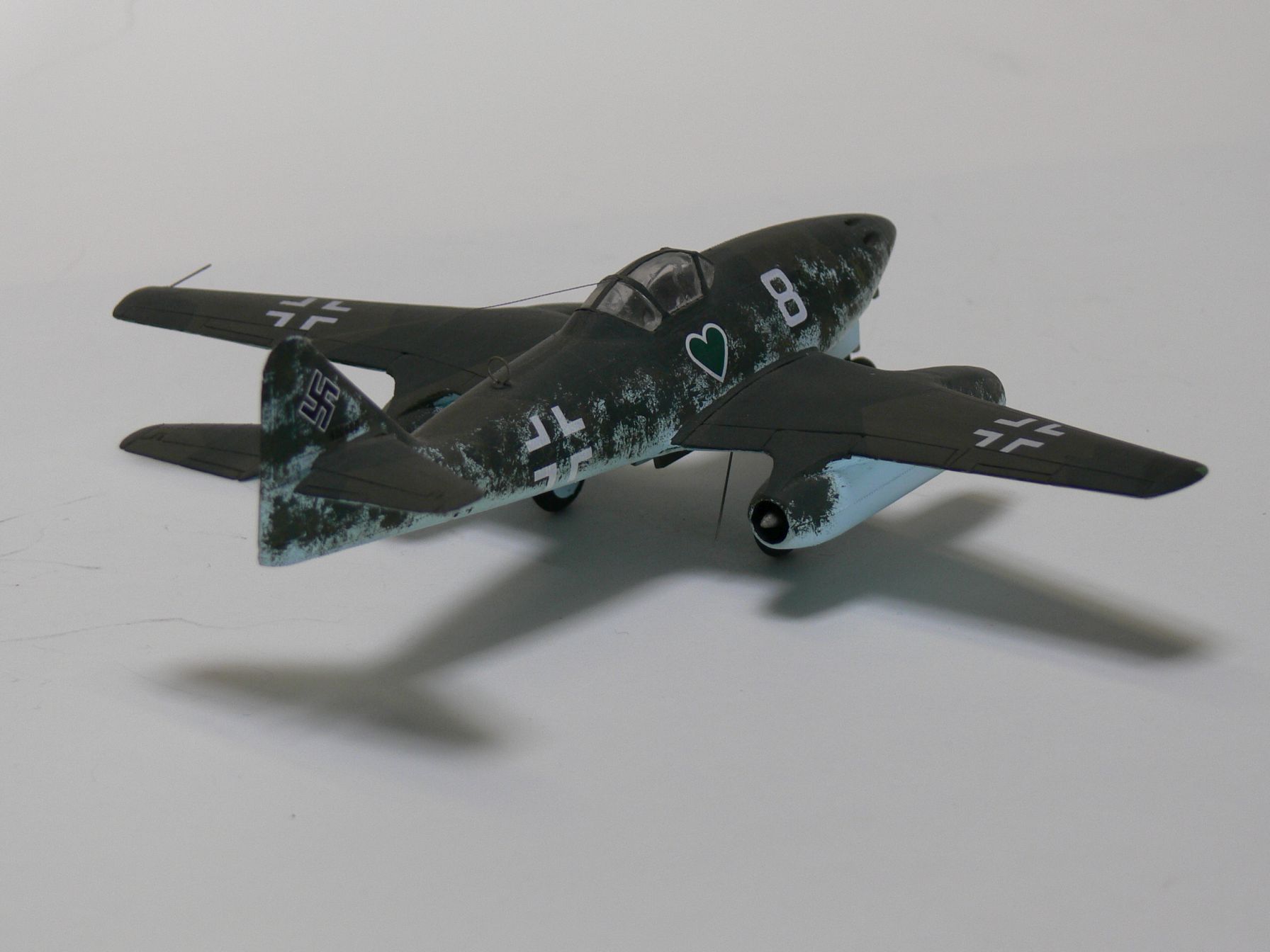
Today, in our ‘Model of the Month’ section, we present the first mass-produced and deployed turbine-powered fighter aircraft – the Messerschmitt Me 262 ‘Schwalbe’. Intensively examined and tested by the Allied powers after the war, this design paved the way for all subsequent high-speed and turbine-powered aircraft.
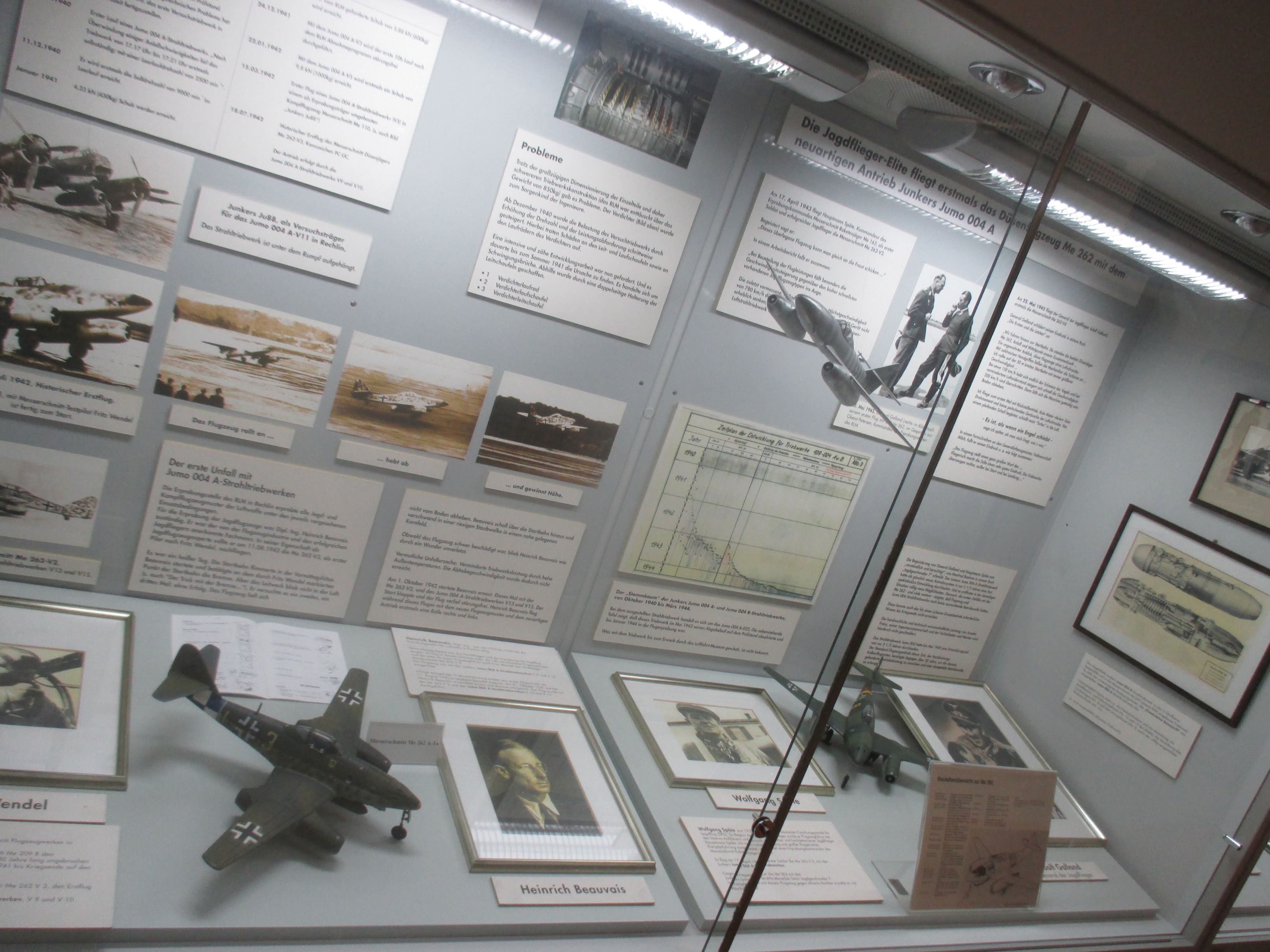
The Models
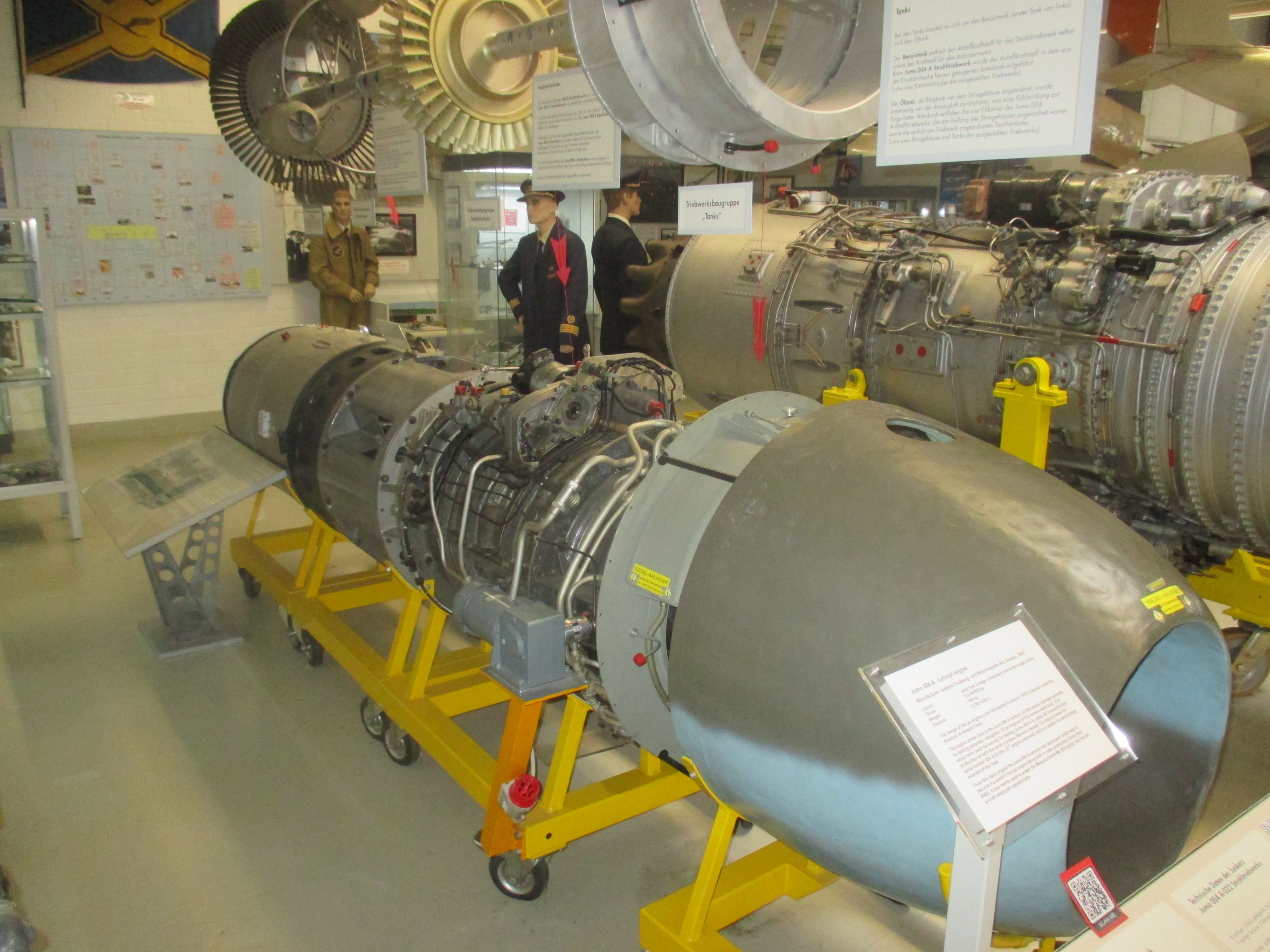
Alongside an original Junkers Jumo 109-004 engine, complete with explanatory notes and functional diagrams, and a display case detailing the development history of the Messerschmitt Me 262, our model exhibition features miniatures in all standard scales covering the entire range of this aviation classic.
The Original
Building on the design principles of the two Heinkel models, the He 178 and He 280, from 1939 and 1941 respectively, Professor Willy Messerschmitt designed the Me 262, which he described as his most important aircraft. And indeed, this first jet fighter to be mass-produced and deployed became the ‘blueprint’ for all subsequent jets worldwide. Arguably the most elegant fighter aircraft of the Second World War – and the most powerful interceptor to boot – was developed from 1938 onwards, with its maiden flight taking place in July 1942. With two turbines, it was almost 200 km/h faster than any piston-engine aircraft; equipped with four 30 mm machine guns and boasting excellent handling at high speeds thanks to sophisticated aerodynamics, this was the weapon that, whilst it did not alter the outcome of the war, could well have repelled the Anglo-American air offensive that began in 1943.
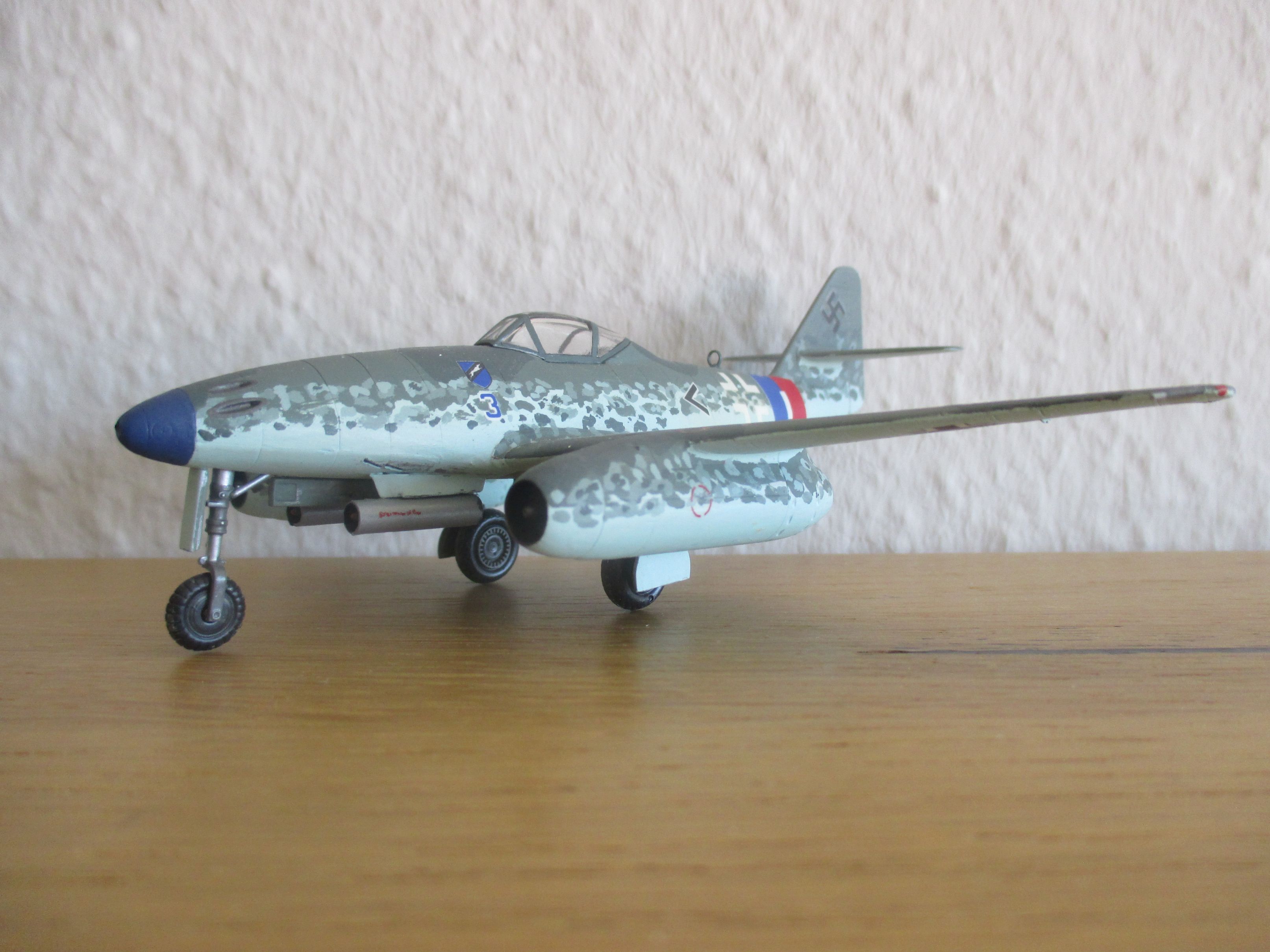
Had… For, on the “Führer’s orders”, the first A-1a series aircraft built had to be converted into fighter-bombers, the so-called “Blitzbombers” of the 262 B-1a type. This misuse in a strategic defensive role deprived the fighter force of these technically superior aircraft, without providing any effective relief in the imposed role. The bomb load and tactical mission profile massively reduced the 262’s performance and made it vulnerable. General wear and tear and shortages in the final year of the war ultimately limited the success of the ‘Zwozwoundsechzig’ (262) – which was eventually designated as a standard fighter after all – to a symbolic extent.
“It’s as if an angel were pushing it.” Adolf Galland after his first flight in the 262.
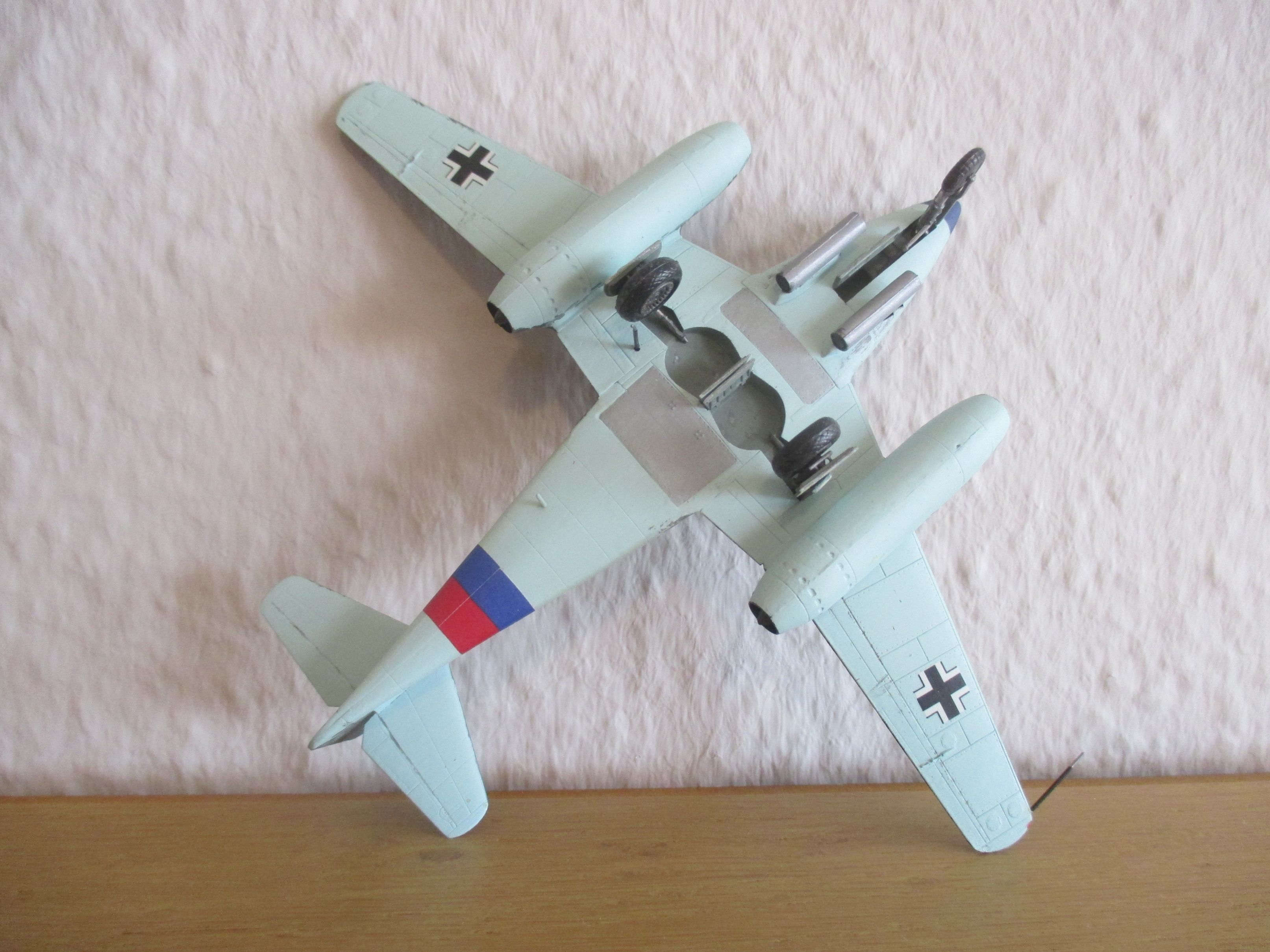
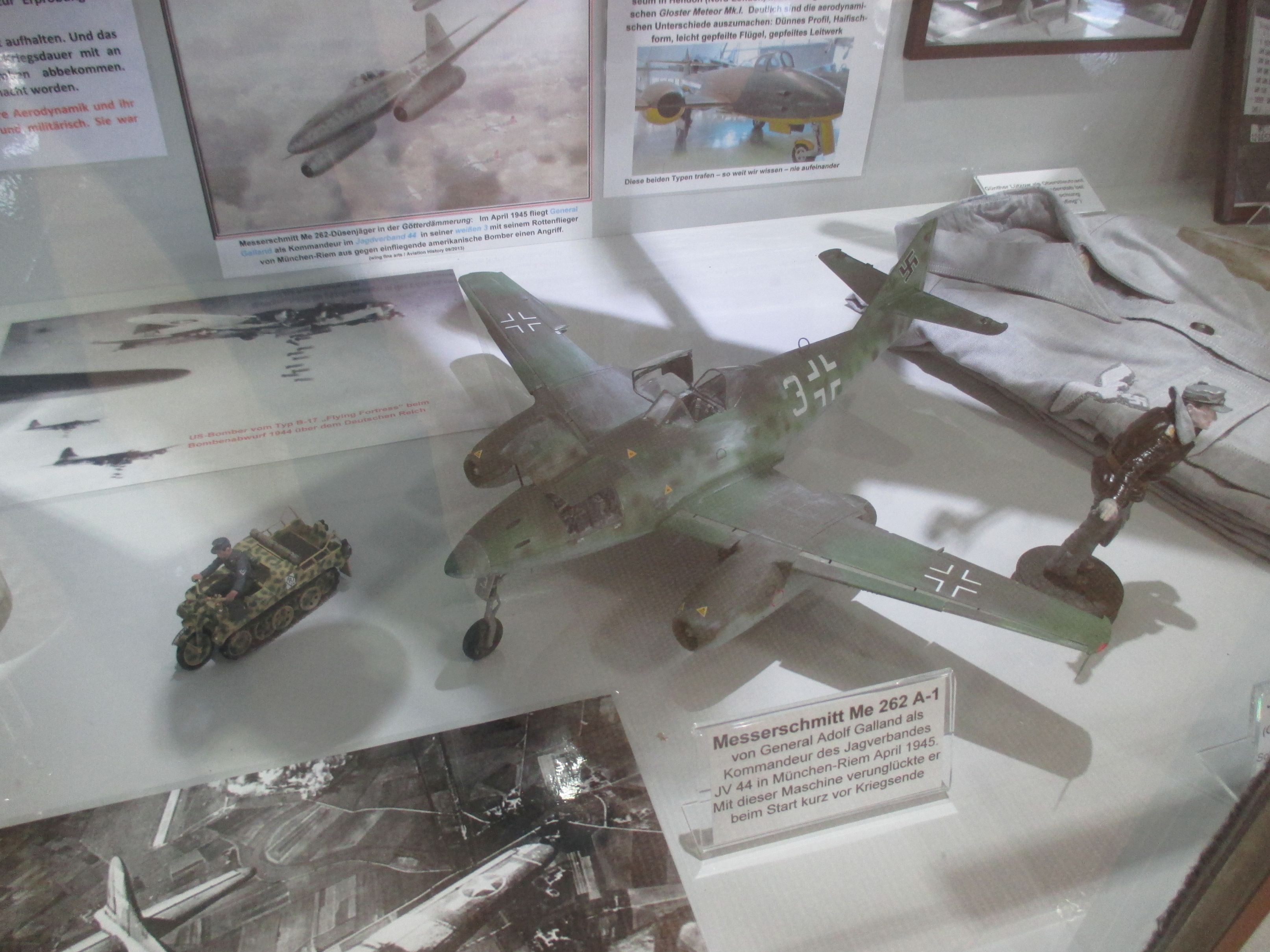
However, a significant part of the credit for proving the technical and tactical excellence of the ‘Schwalbe’ went to fighter ace General Adolf Galland, who had been relieved of his post due to his stance in the dispute over the 262’s deployment with the political leadership. His handful of selected Luftwaffe fighter aces were able to achieve further notable individual successes in the final months as ‘Jagdverband 44’ flying the Me 262. In particular, the provisionally deployed R4M rockets were capable of (literally) blowing up the Allied bomber formations – and at a speed that left the dense escort of Mustangs and Thunderbolts with hardly any time to react.
Although the ‘Schwalbe’ was the aircraft that achieved the first historic aerial victory by a jet – on 26 July 1944 – it had its greatest impact after the war had ended: features of the 262 were incorporated into almost all subsequent jets produced by the Allied powers.
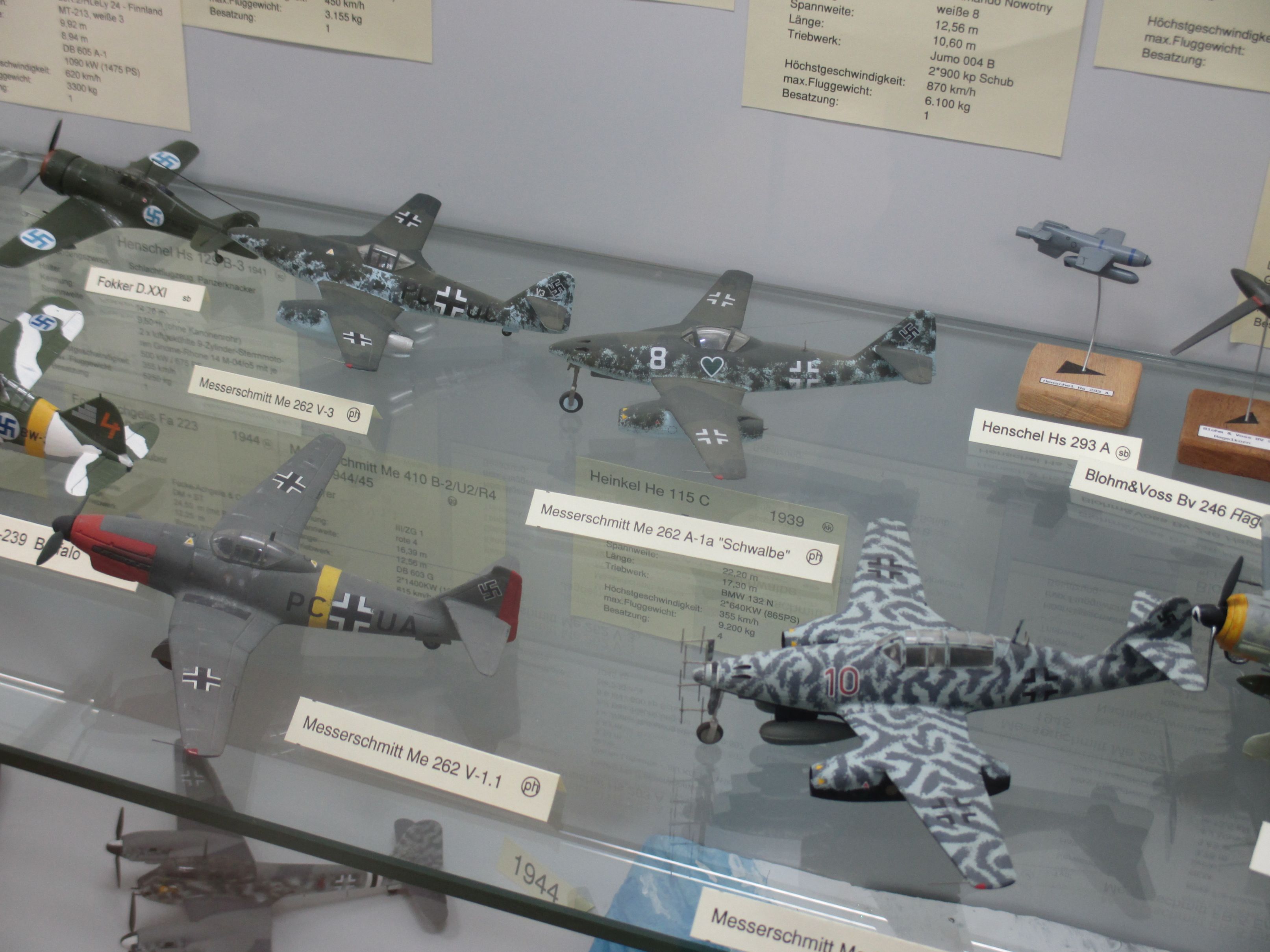
Me 262 A1-a specifications
Length 10.60 m, wingspan 12.48 m, take-off weight 6,400 kg, propulsion: 2 x Junkers Jumo 109-004 B turbojets, each with 890 kp static thrust, maximum speed 870 km/h, range approx. 900 km, crew 1, armament 4 x MK 108 (30 mm), additionally unguided rockets on a trial basis, e.g. R4M (50 mm). Number built of all variants: approx. 1,100, in active service from spring 1944 to May 1945.
Welcome!
Have we managed to pique your interest in our collections, which feature over 40 original and faithful replicas of gliders, light aircraft, commercial aircraft and military aircraft, as well as twice as many engines and hundreds of pieces of equipment, not to mention our model collection? If so, we look forward to welcoming you to Ulmer Straße at the Hanover Exhibition Centre
sb
You can contact the author of the Model of the Month series here: Autor-MdM